The Game of Life 2
- 4.5
- Rating
- 500.00K
- Installs
- $4.99
- Price
 Analysis by App-foxy
I went into The Game of Life 2 expecting a familiar digital board game, but its presentation quickly made it feel more like a light, guided journey than a static roll-and-move experience. The basic idea is easy to understand: you make choices, move through a life path, and see where those decisions take you. What kept me interested was the way the game turns ordinary board spaces into small moments of anticipation. Even when the result depends on luck, I still felt involved because my choices gave each run a slightly different direction.
This is a paid board game from Marmalade Game Studio, aimed at an Everyone audience. It costs $4.99, with optional in-app purchases ranging from $0.99 to $34.99 per item. That combination is worth understanding before installing it: the main game is not presented as a free download, so the purchase decision comes first, while the extra purchases may matter to players who want more content or customization. I found the core experience most appealing when treated as a relaxed family game rather than as a serious strategy title.
A bright life journey with a clear visual voice
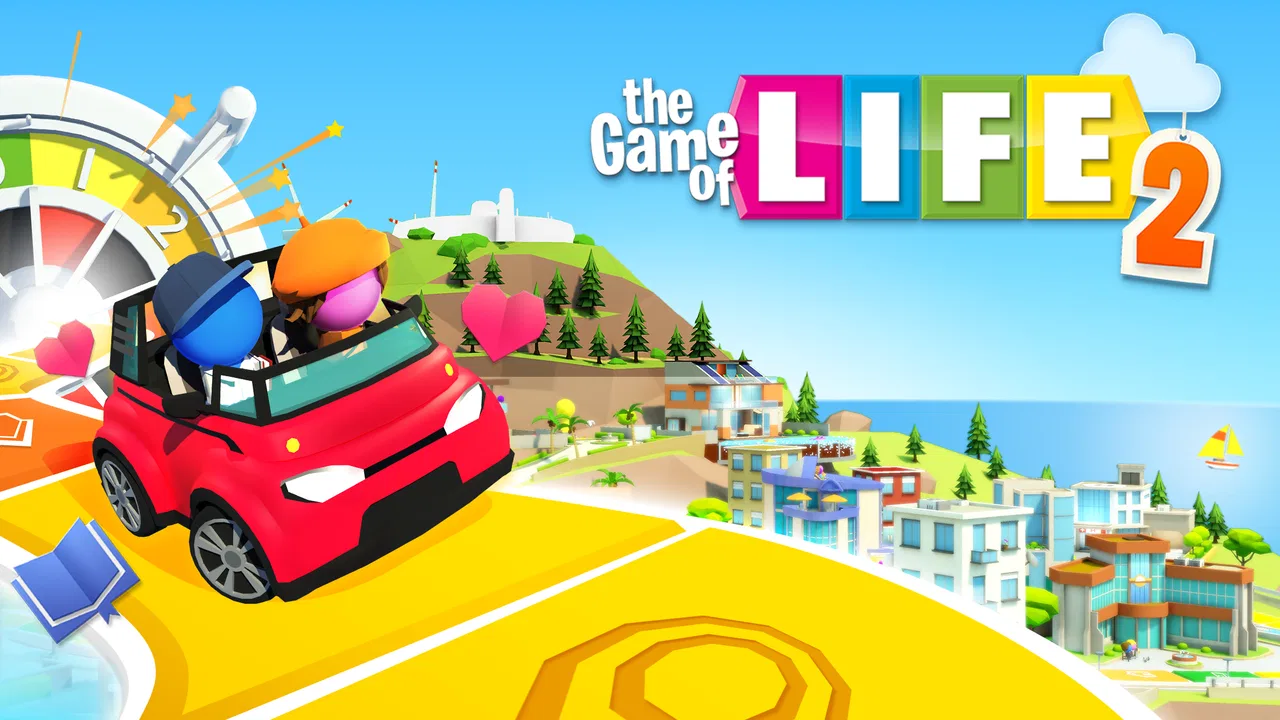
My first impression came from how clearly the game communicates its tone. The art direction is colorful, friendly, and deliberately playful. It does not try to make the board look like a realistic map or a complicated simulation. Instead, the visual language turns the idea of a life journey into something cheerful and readable, with a board that feels designed for quick recognition on a phone or tablet screen.
You May Also Like

 Blood Strike: 2.5 Anniversary
Blood Strike’s Loadouts Turn Every Drop Into a Tactical Gamble
A close look at Blood Strike’s custom loadouts: how fast access to signature weapons reshapes its battle royale rhythm, rewards preparation, and narrows the gap between fights.

 Pandora - Music & Podcasts
Pandora’s Music Is Easy to Start, but Harder to Recover
Pandora’s strength is its low-effort path from a seed to a station. Its weak spot is how much confidence it asks you to place in connection, setup, and quiet recovery.

 8 Ball Pool
 Is Built on Rivalries, Rematches, and Routine
A close look at the rivalries, rematches, shared routines, and unanswered safety questions that turn a quick pool match into a persistent mobile community.

 Samsung Music
’s Quiet Strength Is Playing What You Already Own
Its reach comes less from spectacle than from dependable access to a personal library. That simplicity is both the app’s strongest retention engine and its ceiling.

 AccuWeather: Weather Radar
AccuWeather Review: A Quick, Clear Forecast for Everyday Decisions
For everyday plans, the best forecast is the one you can understand quickly. AccuWeather makes rain timing, radar, and local conditions easy to act on, with a few trade-offs.

 Hill Climb Racing
Why Hill Climb Racing Still Turns Crashes Into One More Run
A tiny car, a bumpy hill and one more upgrade: Hill Climb Racing keeps resurfacing because its simple chaos makes every near-miss feel personal.
More From Our News Desk



That clarity matters because board games on mobile can easily become cluttered. Here, the visual approach supports the rules. Spaces, characters, and events are presented in a way that helps me understand where I am and what kind of decision is in front of me. The cheerful look also softens the competitive side of the game. Losing a turn or ending up with an unexpected result feels more like part of the story than a harsh punishment.
The character presentation adds personality without making the game feel like a role-playing game. I am not managing a deep set of statistics or building a detailed avatar with dozens of technical options. Instead, the visual identity works as a quick way to make my journey feel like mine. That is a smart fit for a board game whose appeal comes from seeing a familiar path unfold in a different way each time.
One useful tip is to pay attention to the board before rushing through a turn. The colorful design encourages quick play, but the important information is often easier to absorb when I pause and look at the available paths and choices. This is especially helpful when playing with children, because it gives them a chance to explain what they want to do rather than simply tapping the most obvious button.
The setting is broad rather than deeply detailed. I would not choose this game for a rich fictional world, extensive lore, or a story with carefully developed characters. Its world exists to frame the board and make the decisions feel lively. That limitation is also part of its strength: there is little visual or narrative baggage to learn before a new player can join.
In an everyday situation, I can see it working well after dinner when a family wants something more interactive than watching television but less demanding than learning a complex tabletop game. One person can explain the general idea, everyone can make choices as they go, and the bright presentation helps younger players stay interested. It is also suitable for a short casual session when the group does not want to commit to a long strategy game.
How the setting supports the choices
The game’s visual world works best when it makes decisions feel meaningful without pretending that every outcome is under the player’s control. That balance is important. A purely random board game can become passive, while a heavily strategic one may intimidate casual players. The Game of Life 2 sits between those extremes: the board gives me a sense of direction, but chance and changing circumstances remain part of the fun.
I also appreciated that the presentation keeps the central theme approachable. Life events can be represented as playful board-game moments rather than heavy or realistic problems. This makes the experience comfortable for mixed-age groups, though it also means players looking for mature storytelling should look elsewhere. The Everyone rating matches the accessible tone, and I would especially recommend it to households that want a game children and adults can understand together.
There is a trade-off in that simplicity. After several sessions, the visual novelty can become less important than the decisions themselves. If I am playing alone repeatedly, I may notice the structure more quickly than I would during a lively group session. The game benefits from conversation, reactions, and the small drama of watching another player’s path develop.
Sound that keeps the board moving
The sound design contributes to the game’s upbeat mood rather than trying to dominate it. Audio cues help turns feel complete and give actions a little more presence than silent taps would. That may sound like a small detail, but it affects pacing: a board game feels more satisfying when movement, decisions, and results have a clear rhythm.
I found the audio most useful during group play, where several people may be watching the same screen. A sound cue can signal that something has happened even when not everyone is holding the device. It helps preserve the sense that the board is an active shared space, not just a menu being passed around.
At the same time, I would not describe the sound as the main reason to play. The art and rules carry most of the experience. Players who prefer quiet gaming should be comfortable lowering the volume, while those who enjoy a more animated presentation will likely appreciate the extra energy. The important point is that the audio supports the setting and does not turn the game into an overstimulating spectacle.
The pacing follows the same principle. A turn has enough ceremony to feel like an event, but the game remains easy to pick up. That makes it more suitable for casual groups than board games that require long planning phases. The downside is that players who love analyzing every possible move may find the rhythm too gentle. This is a game about seeing a life path unfold, not about calculating a perfect sequence several turns ahead.
A practical way to improve a session is to decide beforehand whether the group wants a quick race through the board or a more social experience. If everyone is waiting impatiently, keep choices moving and avoid overthinking. If children are involved, let them talk through their decisions, because the conversation is part of the entertainment. The same game can feel hurried or relaxed depending on how the players use those pauses.
Where the mechanics fit—and where they do not
The mechanics are built around accessibility. I can understand the broad objective quickly, and the game does not require the kind of rulebook study associated with heavier digital board games. That makes it a good introduction for someone who normally avoids strategy apps. The familiar life-path theme also gives new players an immediate mental model: move forward, make choices, and see how the journey develops.
What makes the experience more interesting than a simple race is the tension between decisions and chance. I can influence parts of my route, but I cannot control every result. That creates the right kind of uncertainty for a family board game. A younger player can still have a memorable run, while an experienced player can think about which direction seems more appealing without assuming that planning guarantees victory.
One of the less obvious strengths is its value as a conversation game. The decisions are often more entertaining when players explain why they chose a particular route. That social layer gives the mechanics additional depth without adding complicated systems. In my experience, the best sessions are not silent competitions; they are shared stories about what each player decided to do and how the board responded.
That also reveals the main weakness. If I want a game where my skill consistently outweighs luck, this is not the ideal choice. A strong decision can still lead to an unexpected result, and a player who makes a less thoughtful choice may benefit from the turn of events. I see that as intentional, but it will frustrate anyone who wants tight competitive control.
The game is also less suitable for players seeking a deep solo challenge. Its strongest qualities come from comparing journeys, reacting to other players, and enjoying the surprises together. A solo player can still explore the board and make choices, but the social energy is harder to reproduce. For individual play, I would rather choose a board game designed around puzzles, resource management, or a more demanding campaign.
Another trade-off concerns optional spending. The base price already makes this a purchase rather than a no-commitment trial, and the additional in-app purchase range means families should decide what they are comfortable buying before handing the device to a child. I would treat the extra items as optional rather than necessary to understand the main game. Setting expectations early avoids the common problem of a casual family session turning into a discussion about a purchase prompt.
For compatibility, the game requires Android 6.0 or later. On supported devices, the current version is 1.0.5. Those details are useful when deciding whether an older phone or tablet is appropriate, especially if the game is intended for a shared family device. I would also install it before a planned gathering rather than waiting until everyone is ready, simply to avoid setup interruptions.
Who will enjoy it most
I would recommend this game to families, casual board-game players, and fans of light decision-making who want a colorful experience that can be explained quickly. It is particularly well suited to players who enjoy the feeling of a personal story but do not need a complex narrative campaign. The Everyone rating reinforces that broad accessibility, although adults should still guide younger players around optional purchases.
It is also a good choice for people who like replaying a familiar structure with different outcomes. The appeal is not discovering an enormous world or mastering a difficult competitive system. It comes from asking, “What happens if I take this path instead?” That makes it easy to return to for another group session, especially when different players make the game feel different.
I would skip it if I wanted a fast arcade game, a realistic life simulator, or a board game where every result can be traced back to superior planning. I would also look elsewhere if I strongly dislike luck-based mechanics or if I usually play alone and expect a demanding long-term challenge. The cheerful presentation cannot compensate for a mismatch with those preferences.
The game has reached over 500 thousand installs, with an average rating of 4.5 from around 20 thousand ratings and roughly 3.2 thousand reviews. Those figures suggest that it has found a substantial audience, but they do not change my main advice: choose it for its social, accessible board-game style rather than because it promises deep strategy.
My final take on the mood and the match
What stayed with me was the consistency between the art, sound, setting, and mechanics. The bright board makes the journey easy to read, the audio gives turns a little lift, and the pacing leaves room for reactions without demanding long explanations. None of those elements tries to become more important than the board itself. Together, they create a friendly mood that supports the central idea of making choices and watching a personal route take shape.
The best way to play is to treat each session as a shared story, not a test of perfect strategy. That mindset makes the luck feel entertaining instead of unfair and gives the visual presentation a real purpose. I would play it with family or friends, keep the session relaxed, and let everyone discuss their choices. I would be less enthusiastic about buying it solely for repeated solo play or for competitive depth.
Overall, I think The Game of Life 2 is a polished fit for casual board-game fans who want an approachable digital experience with a lively sense of occasion. Marmalade Game Studio keeps the rules readable and the atmosphere welcoming, while the branching decisions provide enough variation to make another run tempting. Its paid entry and optional purchases deserve a little thought, and its reliance on chance will not suit everyone, but for a family-friendly evening game, it delivers a coherent and enjoyable journey.
FAQs for The Game of Life 2
01What is The Game of Life 2?
The Game of Life 2 is a digital board game inspired by the classic Game of Life. Players spin a wheel, choose routes, make career and lifestyle decisions, collect money, and try to finish with the highest overall wealth. This sequel adds modern careers, multiple life paths, updated visuals, and different worlds, making each playthrough less predictable than the original tabletop experience.
02Can I play The Game of Life 2 offline?
Yes, The Game of Life 2 generally supports offline play for its single-player modes and local pass-and-play games, so an internet connection is not always required. However, online multiplayer features, account-related services, updates, and some downloadable content may require internet access. It is best to launch the game once while connected and check the specific mode before traveling or playing without Wi-Fi.
03Does The Game of Life 2 support multiplayer?
The game offers several multiplayer options, depending on the platform and current version. You can usually play against computer-controlled opponents, share a device for local multiplayer, or compete online with other players. Online features may require a stable connection and may be affected by platform restrictions, matchmaking availability, or whether other players own compatible versions of the game.
04Is The Game of Life 2 free to download and play?
The Game of Life 2 is normally a premium game rather than a completely free-to-play title, although its price can vary by store, device, region, and promotional period. Additional themed worlds or content may also be sold separately. Before downloading, review the store listing carefully to see whether the purchase includes the full game and whether optional in-app purchases are available.
05Is The Game of Life 2 suitable for children and families?
The Game of Life 2 is designed as a family-friendly board-game experience and is easy for most children to understand after a short introduction. Its choices involve careers, money, relationships, and life events, presented in a colorful and humorous style. Parents should still check the age rating, online multiplayer settings, and any optional purchases before allowing younger players to use the app.
Pros
- Many career and lifestyle choices make each playthrough feel different.
- Bright 3D visuals and lively animations make the board enjoyable to explore.
- Supports local multiplayer
- making it fun for family and friends.
- Optional expansions add new boards
- goals
- and replay value.
- Simple controls make it accessible for younger and casual players.
Cons
- The full game requires a purchase after the initial download.
- Some extra boards and content may require additional purchases.
- Luck from the spinner can outweigh strategic decisions in some matches.
- Games may take a while to finish
- especially with several players.
- Online multiplayer availability and matchmaking may vary by platform.

The Game of Life 2
Gallery